Showing posts with label politics. Show all posts

2015-11-05

Role Models of Defiance

Today, it is again the fifth of November. A day during which I like to consider my place in society and society's place within myself. In previous years, I've used this day to prompt discussions regarding privacy, surveillance, control, and even a bit about setting boundaries. This year, I'd like to discuss the importance of questioning established systems.

I've written before about the costs and concepts of tradition and complacency before, emphasizing the benefits of critical thinking and asking "Why?".
You would not devour a meal before minimally evaluating its edibility, therefore I also encourage you to carefully consider what intellectually digest before you risk poisoning your reason and wisdom.
The same sentiments can be applied toward establishments of authority and organization. In fact, a number of psychological studies imply the challenges encountered when one does not have a healthy counter-balance for authority. One particularly famous (or infamous) study is the Milgram experiment [Wikipedia]. In these studies, Yale psychologist Stanley Milgram measured an individual's willingness to obey the orders of an external authority and inflict perceived harm upon another person, even as inflicted that harm was contrary to their personal ethic. (Hank Green does a great job of summarizing this experiment in "Social Influence: Crash Course Psychology #38" [YouTube])

Of the results summarized by Hank, one significantly caught my attention: "Subjects are more likely to comply with orders if they didn't see anyone else disobeying, no role models of defiance." (You'll notice that it was Hank's words within that video which inspired this article's title and prompted its contents.) When I first heard those words a couple years ago, the gears began turning in my mind. What does it mean to be a "role model of defiance"? Do we have any or many in our society which stand in such a role?


(Please read footnote 1 regarding this image.)

2015-10-30

Politics haunted by fear

This morning, I was greeted by a post from my friend and frequent collaborator. He sought my opinion on "Scary Politics" [Slate].
Fifteen minutes later, I had written what clearly needed to become a full blog article. So, after a bit of editing, here it is....


Image source: "Fear" - Pixar Wiki

Fear is an effective motivator. It's instinctive and requires no higher thought; this is both a good and a bad thing. On the one hand, it can save our skin (literally) when rational decision making would take too long. On the other hand, our innate bodily systems (e.g. the limbic system) override and highjack our rational thought processes. In effect, our mind becomes helpless to the control of fight/flight.

You can see this response reflected in the current conservative base: Fight against perceived threats (terrorism, "lawlessness", drugs that will harm "the children"), run from things which overwhelm your already stressed mind (climate change, social inequality, religion vs reason), prepare for potential problems (tighter budgets, closer to home focus), etc.. Meanwhile, the liberal base is almost blinded by a euphoric abundance of hope and trust. Care for those in need (welfare, healthcare), provide for the future (college loan decrease, better fund education), invite social change and progress (look to the youth, legalize same-sex marriage), etc.. (For initial thoughts on the relationship between fear and trust: "Put your heart into it")

The result of these related but opposite "feelings" is a fundamental clash between ideologies (summarized well recently by Reddit user SnappyCrunch [Reddit]). In my opinion, what's needed is healthy critical thinking on the issues. Sometimes, fear needs to be acknowledged and obeyed. Other times, it needs to be set aside. I try often (and also encourage others) to recognize "The Flinch". Once you recognize that fear response you can engage higher reasoning to determine "Is this something I react to or push through?".

Personally, every time I face a challenge and feel that fear response, that flinch. I would acknowledge it and recognize that -- at that moment -- my body and senses were preparing for what I was going to do. Furthermore, I reassured myself that I had learned and developed the necessary skill to take on what I was about to do at that moment. And then... I proceed with the appropriate action based on those skills and understanding not based on the baser reaction. (If during my honest self-assessment, I felt that I did not have the necessary skill, I would choose not to proceed. Remember, critical thinking is about the decision not the outcome.)

Politically, this means acknowledging the triggers we have as a society and then addressing them on a grander scale with rational thought and respect for those who are struggling to overcome fear and expand their comfort zones. We can do this, but it's going to take effort within the mind of every individual before it will effectively change on a societal scale. As I said in one of my defining blog articles, "Life isn't about panic, luck, and control; it's about love, respect, and trust."

2015-06-28

Tau and equality

Periodically, on June 28th, I draw attention to Tau Day, a concept in math which helps "round" out learning angles and waves. Only two days ago on June 26th, another date worth remembering occured: the Supreme Court of the United States of America has "held that state recognition of same-sex marriage is a constitutional right under the Fourteenth Amendment" [Wikipedia: "Obergefell v. Hodges"]. While I, personally, am unaffected by this decision, I do think it's an important advance in equality in the USA and I'm glad this country has chosen to see the LGBT community as I always have: equal and able to pursue what they love.


Coupled with this landmark court decision, I think we should recognize the mathematical unity of the circle of hands being joined around the United States of America these last few days. Earlier this year the "Ultimate [Half Tau] Day" (aka Pi Day) occurred and in my writing I drew attention again to how using Tau can help people understand circles, angles, and waves with ease.

Here's an entertaining overview of Tau by DNews:

URL: https://youtu.be/kmnogV9S7b8

Additionally, I invite you to watch the long version of the Tau Manifesto talk below or you can take a smaller slice of the pie by jumping back to the Half Tau article to watch the short version. Either way, let's remember the significance of June 26th as we move forward as a country and the significance of June 28th as we attempt new mathematical understanding. Through both politics and math we will find new ways to overcome obstacles and inequality both in human rights and in math education.


URL: http://youtu.be/H69YH5TnNXI

Read more about Tau here: http://www.tauday.com/

2014-11-05

Privacy and Social Media

Remember, remember the fifth of November.

Three years ago, I wrote about "Privacy and Control", discussing topics of privacy in a world driven by data-collection and how "our gadgets have or will be taking on qualities commonly associated with gods: omnipresence, omniscience, and omnipotence". Today, I'd like to remember and reflect on those topics and check-in with how privacy is holding up under the current surveillance of our technology, most especially social media.


Photo: GETTY IMAGES, found here.

The maelstrom of data and information has grown in strength as technology develops. New venues for self-promotional social media pop-up everywhere; we have networks for where you go, what you're doing, what you're reading, what you're watching, who you're with, who might be nearby that you might want to meet, there are even services that enable you view and share the "as-it-happens" actions and location of your pets. For some, this is an exciting exploration of new territory. For others, it's a decent into terror.

The relentless march of technology presents society with an unending series of thin red lines, boundaries beyond which the future of our familiar comforts are uncertain. We seem well aware that data is being gathered. Since publishing my initial article on this subject, there have been a number of controversies, revelations, and even revolutions having to do with privacy and data (e.g. PRISM, Vodafone report, RSA encryption backdoor). Have these events changed our view of technology and privacy? I think the events have certainly made more people aware of a long-existent situation. That awareness has sparked a new surge in privacy-positive actions and services, but I posit that the arms-race of information and privacy is nothing new. The previous surge, on the opposite side, was made in 2001 when the public feared terrorism more than surveillance (e.g. PATRIOT Act, TSA).

The digital and physical worlds continue to blend. New "smart technology" brings more convenience to our households. Some people shy away from these new developments, preferring the safety of familiarity. Personally, I enjoy the forward progress of technology. In fact, my opinion about privacy and technology remains much the same as it was three years ago:
I am unafraid of the omnipresence of technology because I am more than the facts and data amassed. I choose not to attempt to hide the cataloging of my data because I try to never act without intention. Let me be entirely clear about another opinion I have of data and surveillance as it relates to freedom. There are those who would choose to use the gathering of data as a way to prevent others from having the freedom to act of their own will. This is never OK. In my opinion, a person should be allowed to act however they choose; as long as those actions do not prevent another person from making their own -- possibly opposing -- choice.
Social media presents us all with a challenges to our current paradigms. Where do we draw our own personal lines? How much is too much information? Each of us must establish the boundaries of our individual comfort zones [INDY Blog: "Experience the Challenge"]. Much like the differing opinions on personal space within societies around the world, communities may find themselves interacting with individuals with differing social media "personal bubbles". While I often find myself comfortable with a very large social media bubble, you might be inclined to be more private.

Today is the day that you define your boundaries and understand the lines which you are uncomfortable having others cross, whether governmental or social. Once you find those lines, stand up for them firmly. I respect your right to make your own choices. My choices might be different than yours, but I will still advocate for yours as long as they don't impede on the rights of others. Remember, remember the fifth of November.

2014-01-28

Review: God, No!

God, No!: Signs You May Already Be an Atheist and Other Magical TalesGod, No!: Signs You May Already Be an Atheist and Other Magical Tales by Penn Jillette

My rating: 3 of 5 stars


God, No!: Signs You May Already Be an Atheist and Other Magical Tales was an entertaining read, to say the least. It was easy to see that Penn Jillette had written this book with the same bluntness of intention and voice as he has with most things he does.

I could almost hear his vocal inflections in my mind as I read his words insisting on the importance of being honest by saying "I don't know" when one just doesn't know. I imagined the strain in his voice as he emphasized the anguish of an incident with a hairdryer.

That was the thing about this book, like its author Penn, it was direct, abrupt, utterly honest, and without any sugar-coating added at all. Some of the stories were a bit off topic (sometimes even tangential), but -- like any good performer -- Penn ropes you back in to the discussion and keeps pushing ahead. You don't have to agree with Penn's politics or his decisive desire for evidence-based fact to appreciate his open-minded and socratic approach.

In fact, I can see more than a few parallels between Socrates and Penn. Socrates had ideas that many people disagreed with. Socrates was unforgiving in his search for fact and truth. Not all of Socrates ideas were correct, not all were well-delivered.

I may not agree with everything Penn has to say, but I'd like to think that giving his ideas a voice invites discussion and critical thinking. I'm sure there are quite a few people in the world that would like to have Penn drink hemlock; I'm not one of those people.

In my blog on "Silly Superstition", I said,
Finding humor is a good way to positively influence society to see the silliness of superstition, but critical thinking (asking "Why?") is the best way to stop superstitions before they start.
Through this book, Penn brings comedy to a heavy discussion and critical thinking to taboo discussion. In the end, I think it's worthwhile because the book invites the reader to ask "Why?" and sometimes simply answer "I don't know".


View all my reviews

2012-03-06

2012 Primaries election results

Today is Super Tuesday, a Spring day when most primary elections are held in an election year. Due to high demand during the last presidential election, I published an article showing regularly updated primary election results on a Google Spreadsheet.

As the current election rolls along in 2012, my statistics again indicate that election results are being sought after on the INDY Blog. So, on the biggest election day of the Spring, I present you with a Google Spreadsheet for the...
2012 Republican Primaries
Similar to the previous spreadsheets, you can find the winners for each type of vote, whether by popular vote, delegate, or "superdelegate" (aka high-ranking party member). I will update these results as I'm able and from a smattering of sources, from "both sides of the fence". (I'm trying to relay election results, not spin them.)

2011-11-09

Politics, Religion, and Sex

Those who are different, change the world. Those who are the same, keep it that way.
The momentum of our changing world is driven by controversy and compromise. Change cannot happen without discussion and disagreement.

There are three things that society advises against discussing in polite company: Politics, Religion, and Sex.
In the spirit of investigation and progress, I am going to discuss why I question that logic. I do think there is an appropriate time and place for all things, however I think that the priorities and concerns with the discussion of these "taboos" have been so confused that there is no longer any room for the important intelligent discourse which drives discovery and change.

POLITICS
I would like to begin with the topic of Politics. By the very nature of what it is, Politics is a public matter. Your political opinion -- whether educated or ignorant -- affects us all through the magic of democracy. It is, therefore, very important that we all nurture mature and well-informed political opinions. That doesn't mean that I think that everyone should always stand atop a stump and proclaim their opinions to the world; in fact, I think that practice is part of the problem with the discussion (and practice) of politics. When did being right become more important than doing right?

Standing atop a stump or screaming in someone's face will never produce change. Remember what I said in my most recent article? "I learned years ago that you cannot change to a new system through confrontation or arrogance; you change through education in the new system while simultaneously slowly moving the old practice toward obsolescence." Education is the best way to learn the strengths and weaknesses of the idea/opinion currently held and the idea/opinion you would like to see.

I propose that political discourse is appropriate wherever a willing person or group is found. Please take note of the word "willing"; I've discussed previously that it's always important to me that a person's choices not interfere with the choices or freedoms of others. So, handing out pamphlets is acceptable, but physically stopping a person from carrying out their choices is definitely not. You should attempt to educate, not alienate.

RELIGION
With Religion, things get a bit more tricky. I think Religious preference is a personal choice and therefore should only be announced or discussed within familiar circles. I think it is fine that one would become excited about their personal choices, but it is very important that it be recognized and accepted that no one else should have to agree.

Quiet presentation is really the only appropriate method. Religion is generally something coached and conditioned throughout life, so it's deeply set. If you wish to discuss religion, I suggest that you spend more time asking questions than you do making your own statements. All-too-often a person will push a religious (or anti-religious) opinion which would not have been said without the religious pretense. Simplified, this is the "No offense, but..." approach to discussion. You hear someone say this and you already know that what they're about to say is wholly insulting, but they think a passive-aggressive statement will be less abrasive.

Recognizing my initial point that religion is a personal choice and should be mutually respected, should eliminate the desire to "change minds" and instead promote an intelligent exercise in listening and understanding.

SEX
Sex is a topic which I think American society has gotten completely backwards. The typical American family is frightened to discuss the topic, so they wish a class into schools to discuss it. The schools, in turn, have to dance around the two previous taboos (Politics and Religion) as they explain something perfectly natural to a classroom full of curious adolescents and/or teenagers.

In the home, a discussion about sexual choices should be as comfortable as a discussion about religion. Why is it that some parents can tell a child about one man murdering another (Cain and Abel), but they can't talk about eggs and sperm? What's worse is that this lack of communication is a learned behavior; sex has become an exercise in shame, instead of an exercise in relational interaction. Similar to religion, I think that sexual interaction is a personal choice. As long as that interaction does not hinder the freedoms or choices of another person, it is not something to be hidden or shamed.

So, how do people learn? If they don't already understand something, such as the example of a room full of students in a high school class, where do people turn when they want to learn? By building this wall of shame and taboo, we've prevented a healthy investigative process. It's important that this type of discourse happens first among friends and family (a place of already-known safety). Not only do you strengthen the feeling of trust for the individuals involved, but you have also possibly introduced new questions to a place where ideas and opinions have a tendency to stagnate.

The fascinating fact about discourse is that ideas and opinions change. The discussion of these topics through considerate exchange is the only way to truly evaluate the strength and logic of our ideas and opinions. However, one must recognize that these topics are tied closely with personal identification and security, so it is a horrible violation if you do not first ASK if you may talk about the topic of choice.

Furthermore, if someones decides they're done with the conversation, then it's over. Thank them for their willingness to participate in whatever fashion they already have (e.g. taking a paper, a few minutes of questions, sharing their opposing opinion). It's time to show some respect in discussion, maybe that'll change our mood about beginning them.

2011-11-06

Normality has been restored

An hour ago, the last clocks in the Northern Hemisphere were freed from Daylight Saving Time (DST). Sadly, there are some in the Southern hemisphere which have recently began their ritual of madness; for them I offer consolation with my article on "Why I hate Daylight Saving Time".

I am content to be rid of the odd adjustment for a few months and was set on climbing atop my soapbox and repeating a few of the reasons why you should be too. However, I noticed something this last week which gave me a bit of satisfaction. Discussions (both online and off) about DST have turned largely to criticism. I would overhear people on the bus who were "glad that Daylight Saving Time would be over soon, so that they could have their mornings back". I read many postings through social media of friends complaining of the troubles they had starting their day due to the dark mornings.

You see, DST was extended in the United States in 2007 by the Energy Policy Act of 2005 introduced by Joe Barton, Texas Republican and member of the Tea Party caucus. It should come as no surprise that Joe Barton was a consultant for an Oil and Gas company [Joe Barton - House.gov]. Barton has also been involved interfering in matters of environmental protection. Joe's Act was a success, by the way, a boon for the corporations interested in shifting consumers home earlier in the Summer afternoon (meaning, more AC) and awake earlier in the Winter morning (meaning, more heating). I'm going to stop myself here though about the involvement of energy corporations, mainly because it's all been said already and -- to my satisfaction -- I think most people get it now. (See my article in 2008: "Ditch Daylight Saving Time".)

Observers of DST have a bit of a conundrum, similar to many other system we're seeing protested these days, we're all subjected to the system as long as we continue to participate in it. Unlike oppressive big-brother governments, big financial institutions, and mass food-chains, time isn't just something we can institute locally; in fact it's actually federally prohibited in the USA [Gazette, The (Colorado Springs)]. It was that inability that caused me to realize something about Daylight Saving Time which I hadn't considered before: the practice of DST is similar to the use of the US measurement system. Meaning, it's hardened into the minds of its participants.

In dealing with Metrication, I learned years ago that you cannot change to a new system through confrontation or arrogance; you change through education in the new system while simultaneously slowly moving the old practice toward obsolescence. By the time you suggest removing the old system, most people (which is what matters in democracy) don't care if you do because they've been primarily using the new one anyway. For DST, this means that behaviors have to be changed in such a way that it won't matter what "time" it really is. In keeping with my choice in March, I am still going to avoid telling you how you might choose to spend your day, but I will tell you what I've chosen to do for myself.

Daylight Saving Time is all about "moving daylight". Repeating some text from eight months ago:
The idea of Daylight Saving Time is to make the most of the hours of daylight available during the Summer. That's fantastic! Unfortunately, people use DST as a crutch to hobble a few days of good feelings out of "more" daylight. You've heard this before, but I'll say it again: If you want more daylight, then use it when it's there. Consistently.
All of this shift is around the accepted "9 to 5 day". In a "9 to 5 day", 13:00 (1pm) is made the center point. I thought that was odd, considering noon (12:00) is supposed to be midday, so I chose to rethink my "day" as beginning at 8, thus I reset my midday to 12:00. Under DST, "high noon" occurs at 13:00 for nearly 75% of the year. (You can imagine how much that screws up how to "Tell time using the Sun or Moon".)


Now, my shift in thinking does not mean that I get to leave my job sooner, nor does it mean that I always greet my alarm with happiness in the morning. Similar to my state-of-mind with measurement -- where I use SI (aka Metric) in my head, but convert for the convenience of others in conversation -- I still participate in the daily schedules of those around me. Work is work and if you're lucky enough to have a job right now, you work the hours to which you and your employer agree upon. I do enjoy at least one advantage though, because of my choice I have freed myself from the lock-step of the populace. My choice to change my thinking allows me to shift my non-work activities to whatever feels right for me: I'm able to get in a bit of exercise, while the "9-to-5er" is just waking up; I can stop by the store on a dark Winter morning instead of dodging shopping carts in the aisles in the afternoon.

Another reason that this works well for me is that other parts of society have shifted as well. In the hopes of drawing more customers and more revenue, businesses have been lengthening their hours of operation; some banks are now opening an hour earlier than they did years ago and some retail stores even earlier than that. The minds and traditions of society have also adapted, the American dinner hour used to be 18:00 (6pm), enough time for the bread-winning father to stroll through the door after his 9-to-5 and sit down at the dinner table with his patiently-waiting wife and two or three kids. Now, due to the prevalence and popularity of "primetime television", meal times have been shifted earlier. Besides, now father is expected to help out after the meal and if anyone in that household expects to do anything after dinner that evening, the meal will shift earlier out of necessity.

You see, our observance of DST isn't only about time, it's about lifestyle and tradition. And the beauty of humanity is how we change and adapt, replacing old tools and techniques with new technology and better understood ideas. Don't get too comfortable with those new ideas though, they'll change eventually too.

2011-01-20

Bill Maher: Founding Fathers vs. Tea Party

Bill Maher recently poked some holes in the Tea Party's attempts to tie themselves to the Founding Fathers of the United States of America. Take a look at this humorous clip from Maher's show Real Time:

Source URL: http://tpmdc.talkingpointsmemo.com/2011/01/bill-maher-to-tea-partiers-the-founding-fathers-would-have-hated-your-guts-video.php

I found the Thomas Paine / Glenn Beck comparison the most entertaining. To be honest, Bill Maher humorously illustrates a very disturbing fact about the individuals who subscribe to the Tea Party rhetoric (whether officially or through complaisance); they appear to lack the initiative, resources, and/or education to be properly informed about the history, implications, and outcomes of their misconceptions and resulting actions.

I hold out hope that the natural curiosity inherent in human nature, coupled with our immense treasury of knowledge, will enrich our educational system for the betterment of our species.

2008-12-04

2008-11-05

Voting results of the 2008 US Presidential election

I've updated the spreadsheet with the latest numbers for the 2008 US Presidential election. You can see how the numbers compare for the polls/popular vote/electoral vote.

USA Presidential Election 2008 [Google Spreadsheet]

INDY Poll Results: Who would you like to see win the 2008 United States Presidential Election?

INDY.CC visitors have elected Barack Obama as the 44th President of the United States of America. Here are the results of the long running INDY Poll (which closed this morning)....

- Constitution: Baldwin / Castle »» 0% (1 vote)
- Democratic: Obama / Biden »» 56% (101 votes)
- Green: McKinney / Clemente »» 0% (1 vote)
- Independent: Nader / Gonzalez »» 1% (3 votes)
- Libertarian: Barr / Root »» 1% (2 votes)
- Republican: McCain / Palin »» 39% (71 votes)

Total votes: 179

I am VERY happy to see participation from "third party" voters. Thank you to everyone who participated in this poll.

President-Elect Barack Obama's speech on Election Night

My favorite part of the speech:
America, we have come so far. We have seen so much. But there is so much more to do. So tonight, let us ask ourselves - if our children should live to see the next century; if my daughters should be so lucky to live as long as Ann Nixon Cooper, what change will they see? What progress will we have made?

This is our chance to answer that call. This is our moment. This is our time - to put our people back to work and open doors of opportunity for our kids; to restore prosperity and promote the cause of peace; to reclaim the American Dream and reaffirm that fundamental truth - that out of many, we are one; that while we breathe, we hope, and where we are met with cynicism, and doubt, and those who tell us that we can't, we will respond with that timeless creed that sums up the spirit of a people:

Yes We Can.


URL: http://www.baltimoresun.com/video/?autoStart=true&topVideoCatNo=default&clipId=3102493
Full transcript of the speech can be found here: http://www.baltimoresun.com/news/nation/politics/bal-text1105,0,2684817.story

2008-11-04

Barack Obama, President of the United States of America

The numbers are still coming in, but since McCain has conceded I think it is safe to say....

Barack Obama will be the 44th President of the United States of America!

To quote what I said in an earlier post:
Benevolence and kindness are not things which trickle down through monetary riches, they come from within each of us. Whether through faith in a higher power or faith in the power of the human spirit. It's time for us to put down the sword of vengeance and help each other back to our feet. I realize that it is very scary to let go of what you know, to accept that the past is past, but you need to look to the future now.

Our voices have been raised and they have been heard, but the job is just beginning. It will be a difficult journey, but we CAN get back on our feet. It is time to let go of that which divides us and stand together to build a better future.

Obama places his vote in Chicago

Here's a video (courtesy of the Associated Press) of Barack Obama voting in Chicago today.

URL: http://www.youtube.com/watch?v=VqkNvQlQntQ

ELECTION DAY!

Today's the day! If you haven't already, go VOTE! NOW!

I've made the finally poll updates to my USA Presidential Election 2008 spreadsheet. Check back throughout the day to see the vote tallies as I add them. (I wouldn't expect there to be any numbers coming in until the afternoon MST.)

I have to give a shout out to FiveThirtyEight for providing such statistically detailed polls. And to DailyKos for keeping me aware of the election pulse. On that note, DailyKos has an awesome election map/scoreboard [DailyKos] that they'll be streaming live voting numbers through today. While I would love for you to use my spreadsheet, the DailyKos Scoreboard does look prettier and may be more entertaining to watch.

Have a great day, everyone! And, remember, we CAN do this!

2008-10-30

Obama on the Daily Show

Not long after his "infomercial" played around the country, Obama linked up with John Stewart on the Daily Show. As would be expected from the Daily Show, Barack's appearance was fun to watch. In addition to the humor, Obama discussed a few topics of the campaign trail and a few of the issues facing our country. He also impressed upon the audience his intentions if elected.

URL: http://www.comedycentral.com/videos/index.jhtml?videoId=189761

2008-10-29

Obama speaks to the nation

Barack Obama has thirty minutes of prime time television, including the lead-in to the World Series tonight. (By the way, if you've been seeing the smears or are yourself angry that Obama "delayed" the World Series to speak to the nation with this, then you should probably read the Daily Kos post "A Swing and a Miss" by Scout Finch.)

Embedded and linked below you'll find the video which was shown on seven major channels and in many places on the internet. In the 30 minute spot, Obama visits families across America and addresses the struggles they face.

URL: http://www.youtube.com/watch?v=GtREqAmLsoA

Even if you don't watch all of it, at least try to view the beginning [YouTube] and the end [YouTube] of it. I hope you see that Barack Obama is a man who cares where we go and how we get there, a man who can bring our country together.

Sit, Walk, Run, and Fly

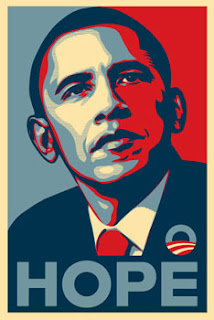
Obama HOPE poster

Rosa sat so Martin could walk.
Martin walked so Obama could run.
Obama runs so our children can fly.


This came from a story on NPR


I have shamelessly copied EXACTLY what you see here from a post I just saw in the DemConWatch Blog. Specifically, this post [DemConWatch] because I think this statement needs to be read and spread.

Generation We

Remember what I said about placing your "Vote for Tomorrow"? What about when I told you to think about future generations when I pointed out "what is in the power of a vote"?

Well, the next in line of those future generations is speaking out. Listen to what they have to say.

URL: http://www.youtube.com/watch?v=vknHKTy1MLY